
AI frameworks worth learning in 2026
A practical breakdown for engineers who are feeling overwhelmed

Hey there 👋,
AI framework hell is real.
Every week, a new AI framework arrives. And every week, developers ask the same question: which one should I learn?
LangChain, CrewAI, LangGraph, AutoGen, Spring AI, LlamaIndex, Vercel AI SDK, OpenAI Agents SDK, Google ADK. Everyone’s telling you to learn the latest one or you’ll fall behind.
Here’s what nobody tells you: you don’t need any of these. The provider SDKs (OpenAI, Anthropic, Google) are powerful enough on their own. You can build agents and complex multi-step workflows without a framework.
Frameworks are genuinely useful once you understand what they’re abstracting away. But, the problem is most developers start with frameworks before they understand the fundamentals. When something breaks, they’re stuck.
This week, I’ll show you the frameworks I think are worth learning right now, and what each one is best for.
The Trade-Off
Every framework is a trade-off. You’re adding a layer between you and the model. That layer gives you convenience, patterns, and abstractions. It also means bugs you didn’t write, upgrade paths that break your code, and opinions about how AI apps should work.
I call this framework tax. Not because frameworks are bad, but because they’re not free. You’re trading flexibility for convenience. Sometimes that’s the right trade. Sometimes it isn’t.
The provider SDKs (OpenAI, Anthropic, Google) are well-documented, stable, and give you direct control. The Gemini SDK in particular has seamless tool calling out of the box.
Here’s the approach I recommend: SDK-first development. Start with the raw SDK. Understand how tool calling works. Build a simple agent loop. Feel the edges.
Then, when you hit a wall, when you need something the SDK doesn’t give you easily, reach for a framework. Now you understand what it’s doing for you. You’re not cargo-culting. You’re making an informed choice.
When Frameworks Genuinely Help
Here are the five situations where I’d reach for one:
First: a production-ready agent loop. The core agent loop is simple. Maybe 70 lines of code. But the production details add up: max iterations, timeouts, graceful error recovery, retry logic. Frameworks have battle-tested these patterns. You can write this yourself. The question is whether you want to discover all the edge cases on your own. Plus, you probably don’t want to write this by hand on every project.
Second: provider flexibility. This is the big one. Moving from OpenAI to Azure OpenAI. Switching from Anthropic to Bedrock. Testing a new model from a different provider. These changes touch a lot of code if you’re using raw SDKs. An abstraction layer makes swapping providers a config change. If you think you might switch, or want the option, this alone justifies a framework.
Third: team standardisation. On larger teams, frameworks enforce consistent patterns. Same structure, same debugging approach, same conventions. Everyone speaks the same language. This benefit scales with team size.
Fourth: complex workflows. Retries, human-in-the-loop approvals, branching logic, parallel execution. If you’re building a workflow engine, frameworks have already solved the hard parts. You could build it yourself, but you’d be reinventing solutions that have been refined over years.
Fifth: multi-agent orchestration. Handoffs between agents, shared state, delegation patterns. Most apps don’t need this. But if yours does, frameworks make it easier than rolling your own.
Provider-Specific vs Provider-Agnostic
One more distinction before the list.
Provider-specific frameworks (Google ADK, Claude Agents SDK, OpenAI Agents SDK) are built by the model providers. They’re optimised for one model family, encode that provider’s best practices, and typically offer the smoothest experience. The trade-off is commitment. You’re betting on that provider.
Provider-agnostic frameworks (Pydantic AI, LangGraph, Vercel AI SDK) abstract across multiple providers. You trade some optimisation for flexibility. When a new model leapfrogs the competition, you swap a config value instead of rewriting code.
Neither is universally better. If you’re all-in on one provider, go provider-specific. If you want options, go agnostic. Know which game you’re playing.
The Five Frameworks Worth Learning
Here are the five I’d actually invest time in - organised by language and use case.
1. Pydantic AI (Python)

If you’ve used FastAPI or Pydantic, this feels instantly familiar. Same developer experience (types, validation, contracts) applied to LLM applications.
It handles response validation, retries on malformed outputs, and structured error handling. Works across all major providers.
Best for: Python developers who think in types and want reliable, testable agents.
2. LangGraph (Python)
LangGraph models AI applications as graphs. Nodes and edges with explicit state control at every point.
This shines when your workflow has branches, retries, parallel execution, or human-in-the-loop steps. More complex than simpler frameworks, but that complexity pays off for sophisticated systems.
Best for: Production systems with complex workflow logic.
3. Vercel AI SDK (TypeScript)
The default choice for TypeScript developers. Clean DX, provider-agnostic, swap models without touching frontend code.
Best for: TypeScript developers building AI applications. If you’re in this ecosystem, start here.
4. Google Agent Development Kit (ADK)
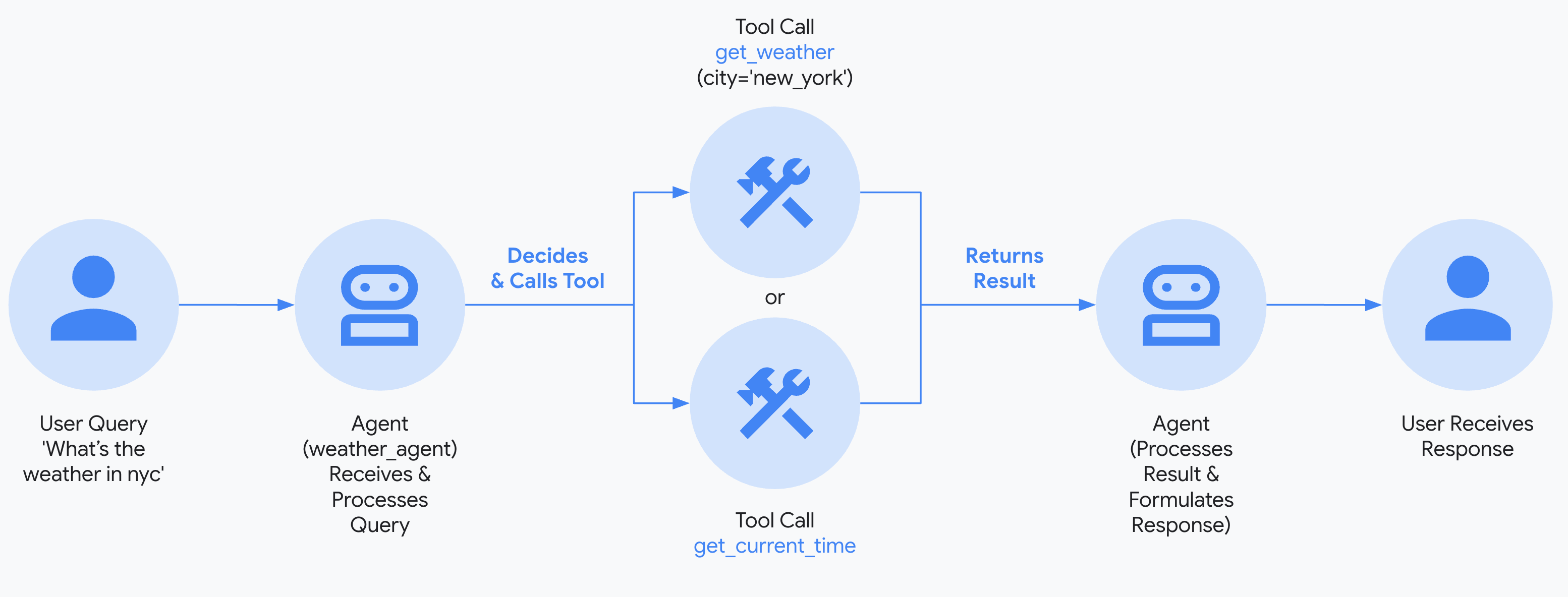
The first framework I’ve seen that takes polyglot teams seriously. Same mental model across four languages (Java, Go, TypeScript, Python).
The standout feature is observability. A built-in web UI (super useful) for traces, tool calls, and agent decisions. You can see exactly why your agent did what it did.
Best for: Teams on Google Cloud, or polyglot teams that want consistency across languages.
5. Spring AI (Java)
For Java shops, this is the natural choice. LLM services exposed through familiar Spring patterns.
The value isn’t innovation. It’s integration. If your team thinks in Spring terms, you add AI capabilities without learning a new paradigm.
Best for: Enterprise teams with Spring Boot microservices adding AI incrementally.
Final Thoughts
Frameworks aren’t the enemy. Neither are they required.
Start with the SDK. Understand how the primitives work: tool calling, message formats, streaming. Build something simple. Feel where it gets painful.
Then, when you have a real problem (provider switching, team coordination, complex workflows) pick the framework that solves that specific problem.
The goal isn’t to avoid frameworks. It’s to use them deliberately. Know what you’re trading away and what you’re getting back.
SDK-first. Then frameworks when they earn it.
That’s how you stay out of framework hell.
Thanks for reading. Have an awesome week : )
P.S. If you want to go deeper on building AI systems without the hype, I run a community where we build agents hands-on: https://skool.com/aiengineer